
What to Know
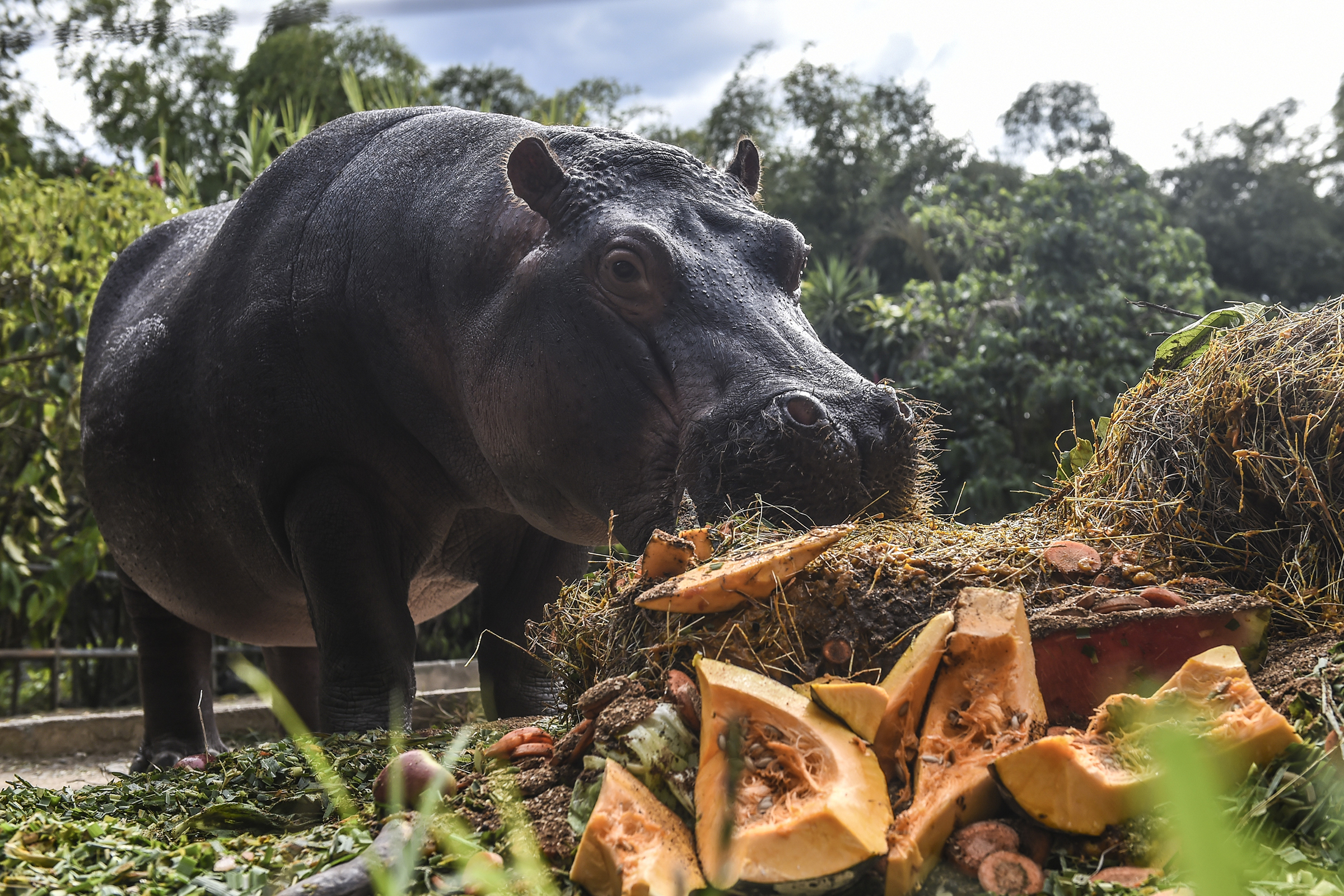
Colombia will euthanize dozens of invasive hippos descended from animals once owned by drug lord Pablo Escobar, in a controversial move underscoring the growing environmental and public safety risks posed by the species decades after their introduction to the South American country.
Environment Minister Irene Vélez said authorities have approved a plan to cull up to 80 animals from a population that has spread across river systems in the Magdalena basin. Officials warn that without decisive action, the number of hippos — estimated at about 170 today — could rise to as many as 500 by the end of the decade, intensifying damage to ecosystems and nearby communities.
"If we don't do this, we will not be able to control the population," Vélez said, describing the measure as necessary to preserve Colombia's biodiversity and prevent further harm to native species.
The so-called "cocaine hippos" trace their origins to the 1980s, when Escobar imported four animals to his sprawling Hacienda Nápoles estate. After his death in 1993, the hippos escaped captivity and began reproducing in the wild. With no natural predators in Colombia, their numbers have expanded rapidly, spreading far beyond the original ranch into rivers and wetlands.
Scientists say the animals pose a unique ecological threat.
Their size and feeding habits disrupt riverbanks and vegetation, while their waste alters water chemistry, reducing oxygen levels and increasing nutrient loads. These changes can kill fish and aquatic plants and threaten species such as manatees, otters and turtles that depend on stable ecosystems.
The hippos have also increasingly come into contact with humans. Authorities report incidents in which the animals have damaged crops, caused traffic accidents and attacked boats or people, raising concerns among rural communities.
For more than a decade, Colombian governments have explored alternatives to killing them, including sterilization and relocation. But both strategies have proven costly and logistically difficult. Sterilizing a single hippo requires heavy equipment and carries significant risk to personnel, while relocation efforts have stalled as no other country has agreed to accept the animals.
A 2023 study estimated that even a limited sterilization and relocation program could cost between $1 million and $2 million and still leave hippos in Colombia for decades. Exporting the animals abroad could cost even more, with some estimates reaching $3.5 million.
Faced with those constraints, the government has allocated roughly $2 million for a program combining chemical and physical euthanasia, alongside continued sterilization of some animals and monitoring to identify those posing the greatest risk.
Even some experts who favor nonlethal approaches acknowledge the difficulty of the situation.
"The ideal scenario would be that no animals die," said environmental law professor Luis Domingo Gómez Maldonado. "But the reality is that, at this point, there is no other option."
The plan, however, has drawn sharp criticism from animal-rights activists and some politicians, who argue the hippos—brought to Colombia through human actions—should not be killed. Sen. Andrea Padilla called the decision "cruel," saying it reflects a failure to pursue more humane solutions.
The debate highlights a broader tension between conservation priorities and animal welfare in a country still grappling with the legacy of decades of conflict. While the hippos have become an unlikely tourist attraction in some areas, providing economic benefits to local communities, scientists warn that their unchecked growth could cause irreversible environmental damage.
_____
Antonio María Delgado; Miami Herald; (TNS) || ©2026 Miami Herald. Visit at miamiherald.com. Distributed by Tribune Content Agency, LLC.